Indoor Particulate Matter: What Your Window Panes Reveal.

Particulate matter isn’t just an issue on busy roads, in industrial areas, or in large cities. Significant levels of airborne particles can also accumulate indoors. Especially in apartments, offices, bedrooms, kitchens, and living rooms, dust, pollen, skin flakes, textile fibers, mold spores, combustion residues, and other particles accumulate in the indoor air every day.
The issue
Many of these particles are barely visible or completely invisible to the naked eye. While visible household dust on furniture, floors, and surfaces is easily noticed, smaller particles often remain suspended in the air for a long time. It is precisely these fine and ultrafine particles that can have a significant impact on the air we breathe.
Anyone who wants to improve indoor air quality, reduce fine dust, and create a more pleasant indoor environment at home should therefore consider indoor air to be an important component of a healthy living environment. Modern air purification can help reduce airborne pollutants and sustainably improve air quality in frequently used rooms.
What is particulate matter?
Fine particulate matter is a general term for solid or liquid particles suspended in the air. Scientifically, these particles are often referred to as “particulate matter,” or PM for short. It is not a single substance, but rather a mixture of particles of varying sizes, origins, and compositions.
Organic dust
Organic dust consists of carbon-containing particles or compounds. These include pollen, mold spores, bacteria, skin flakes, pet dander, biological aerosols, and certain components from exhaust fumes or combustion processes.
These particles may have allergenic, biological, or odor-producing properties. Organic dust in indoor environments can be particularly relevant for people with allergies, sensitive airways, or asthma.
Inorganic dust
Inorganic dust consists of mineral or metallic particles, ash, soot components, construction debris, road dust, or residues from combustion processes. Such particles are generated, for example, by traffic, industry, cooking, candles, wood-burning stoves, or material abrasion.
Unlike many organic particles, inorganic particles react less strongly to photochemical processes. Their reduction therefore occurs primarily through physical mechanisms, such as sedimentation or electrostatic effects.

PM10, PM2.5, and ultrafine particles: The main categories of particulate matter
When assessing the health risks of particulate matter, particle size is the most important factor. The smaller a particle is, the longer it can remain suspended in the air and the deeper it can penetrate the respiratory tract when inhaled.
PM10: Coarse particulate matter
PM10 refers to particles with a diameter of up to 10 micrometers. These include larger dust particles, pollen, mold spores, and visible house dust. These particles are often trapped in the upper respiratory tract, such as in the nose and throat.
Nevertheless, PM10 particles can cause symptoms, particularly in people with allergies or those with sensitive mucous membranes.
PM2.5: Fine particulate matter of particular concern
PM2.5 refers to particles with a diameter of 2.5 micrometers or smaller. These particles are so small that they can penetrate deeper into the respiratory tract. They reach the bronchi and alveoli and remain suspended in the air significantly longer than larger dust particles.
PM2.5 is particularly relevant for indoor environments because these particles can be easily inhaled and do not immediately settle on surfaces.
Ultrafine particles
Ultrafine particles are smaller than 0.1 micrometers. They are often produced during combustion processes, such as from candles, cooking, wood-burning stoves, or traffic emissions, and can enter indoor spaces from outside.
Because of their small size, ultrafine particles are highly mobile. They have a large specific surface area and can penetrate deep into the human body.
Where does indoor particulate matter come from?
Indoor particulate matter comes from many everyday sources. It is often a combination of particles generated within the room itself and particles that enter the home from outside.
Cooking, frying, and baking
Cooking produces fine particles due to heat, steam, grease, and combustion residues. Aerosols and fine dust can enter the indoor air, especially when searing, grilling, or deep-frying. Even though the smell disappears quickly after cooking, fine particles can linger in the air for longer.
Candles, wood-burning stoves, and open flames
Candles, incense sticks, and wood-burning stoves create a cozy atmosphere, but they can also release soot particles, ash, and other combustion residues. These particles may contain both organic and inorganic components.
Textiles, carpets, and upholstered furniture
Sofas, curtains, rugs, pillows, blankets, and bedding make rooms cozy. At the same time, they can trap dust, pollen, dander, and fibers. Movement, vacuuming, shaking, or sitting can stir up these particles again.
Pets, pollen, and biological particles
Pets bring hair, dander, and biological particles into the home. Pollen enters through windows, clothing, or shoes. Mold spores can also be present in indoor air, especially when humidity is high or ventilation is inadequate.
Outdoor air, traffic, and road dust
Fine particulate matter isn’t just generated indoors. Particles from traffic, tire wear, brake dust, industry, or agriculture can enter the home through windows, doors, ventilation systems, or clothing.

Why indoor particulate matter can be harmful to health
The effects of fine particulate matter depend on several factors: particle size, composition, concentration, and duration of exposure. Larger particles are often trapped in the upper respiratory tract. Smaller particles can penetrate deeper into the lungs.
Fine particles remain in the air longer
While larger dust particles settle more quickly, PM2.5 and ultrafine particles remain suspended in the air for longer. This increases the likelihood that they will be inhaled.
Small particles can penetrate deeper into the respiratory tract
PM2.5 can reach the bronchi and alveoli. Under certain conditions, ultrafine particles can penetrate even deeper into the body. Therefore, particle size is a key factor in determining potential exposure.
Long-term stress is crucial
The problem isn’t a single dust particle, but rather repeated and prolonged exposure to indoor air pollution. Anyone who spends many hours a day at home, in the office, or in the bedroom is exposed to the same indoor air over an extended period of time.
Recognizing fine particulate matter: Why visible dust is only part of the problem
Many people judge the amount of dust based on visible deposits on furniture or floors. However, visible household dust accounts for only a fraction of the actual amount. Particularly fine particles are barely visible to the naked eye.

A typical scene: Sunbeams stream through slightly parted curtains, and suddenly, floating particles become visible in the air.
However, what becomes visible in the light is only a small part of the picture. Many smaller particles remain invisible but can still affect indoor air quality.

That’s why cleaning alone is often not enough.
Dusting and vacuuming remove particles from surfaces, but they can also stir up new particles. A good indoor air quality strategy therefore combines surface cleaning, proper ventilation, reduction of dust sources, and active air purification.
Improving indoor air quality: What can be done to reduce fine particles in the home?
If you want to reduce indoor particulate matter, you should combine several measures. A comprehensive approach is particularly effective.
Proper ventilation
Regularly opening windows wide to let in fresh air can help replace stale air. However, the quality of the outside air should also be taken into account. On days with high pollen counts, heavy traffic, or high levels of particulate matter, improper ventilation can introduce additional particles into the indoor environment.
Reduce sources of dust
Candles, incense sticks, open flames, and heavy frying in the kitchen can increase particle levels. People with sensitive airways should make a conscious effort to reduce these sources or ensure good air circulation.
Clean textiles regularly
Curtains, upholstery, blankets, pillows, and rugs can trap particles. Regular washing, vacuuming, and cleaning reduces the amount of dust, pollen, and biological particles.
Use air purifiers to combat fine particulate matter
A suitable air purifier can help reduce airborne particles and certain pollutants in indoor air. Continuous improvement of indoor air quality can be particularly beneficial in bedrooms, living rooms, home office areas, or heavily used rooms.
OZONOS® against indoor particulate matter: How the technology works
OZONOS® relies on a combination of UV-C technology and ionization. These two mechanisms target different types of airborne particles and substances. This approach differs from traditional filter solutions and is based on physicochemical principles.
UV-C-induced oxidation of organic particles
Organic particles and compounds have carbon-based structures. These include pollen, mold spores, bacteria, biological aerosols, VOCs, and certain components found in exhaust gases.
The UV-C technology in OZONOS® can initiate photochemical reactions. This produces reactive oxygen species that react with organic molecules and can alter their structure.
Mechanism of action for organic particles
Complex organic molecular structures can be broken down. Organic compounds can be converted into smaller components. Additionally, the biological activity of certain microorganisms can be reduced.
Ionization and agglomeration of inorganic particles
Inorganic particles such as soot, ash, mineral dust, or abrasion do not react to UV-C radiation in the same way as organic molecules. This is where OZONOS® also relies on ionization.
Ionization produces negatively charged oxygen ions that can attach themselves to particles. This changes the particles’ electrical charge. Electrostatic attraction between particles can occur, resulting in larger particle clusters. This process is called agglomeration.
Mechanism of action for inorganic particles
Particles attract ions, alter their charge, and can combine to form larger clusters. These agglomerates have a higher mass and sink to the floor more quickly. As a result, they are removed from the air we breathe and can subsequently be eliminated through normal surface cleaning.
Why the combination of UV-C and ionization is effective
Indoor particulate matter consists of many different components. It contains organic, inorganic, biological, and chemical particles. For this reason, a combined approach is advisable.
Organic particles can be affected by oxidative processes. Inorganic particles are primarily addressed through physical effects such as ionization, charge changes, and agglomeration. Both mechanisms complement each other.
A complete elimination of all particles under real-world living conditions should not be promised across the board. The effect depends on room size, air circulation, particle composition, operating duration, positioning, and use of the room. A significant reduction in airborne pollution and an improvement in indoor air quality are realistic goals.
Particulate matter in the bedroom: Clean air at night
The bedroom is particularly important when it comes to indoor air quality. We spend many hours in the same environment while we sleep. At the same time, bedding, clothing, mattresses, curtains, carpets, and open windows can release particles into the air.
Many people notice poor indoor air quality in the morning: a dry throat, stuffy nose, coughing, or a feeling of heavy air. An air purifier like OZONOS® can be useful in the bedroom if pollen, dust, pet dander, fine dust, or odors are polluting the indoor air.
Particulate matter in the living room: When comfort and air quality go hand in hand
The living room is often the heart of daily life. It’s where we relax, read, work, eat, and spend time together. At the same time, it’s a source of many dust particles: upholstered furniture, rugs, blankets, pillows, candles, plants, pets, and open windows.
Dust can accumulate especially in cozy living spaces with many textures. Anyone who wants to create a high-quality living environment should therefore pay attention not only to furniture, lighting, and materials, but also to the invisible quality of the room: the air.
OZONOS® solutions can be integrated into various living situations and can help continuously improve indoor air quality.
Air purifiers for fine particulate matter: What should you look for?
If you’re looking to buy an air purifier to filter out fine dust, you shouldn’t just focus on the design or size of the unit. Several factors are key.
1. Room size
The air purifier should be appropriate for the size of the room. A unit that is too small may not work as effectively in a large room. That is why choosing the right size is important.
2. Placement
The unit’s placement in the room affects air circulation. The unit should not be covered or placed behind furniture. For wall-mounted or ceiling-mounted installations, it may be advisable to position the unit higher up.
3. Operating time
Fine particulate matter is constantly being produced. That’s why using the device regularly is more effective than using it only occasionally. Depending on the room and the level of pollution, running the device for a longer period of time can lead to a more lasting improvement in indoor air quality.
4. Maintenance
Many traditional air purifiers use filters that need to be replaced regularly. OZONOS® operates without filters and therefore requires very little maintenance. This can reduce both hassle and costs in the long run.
Particulate matter, house dust, and allergens: What’s the difference?
House dust is the visible mixture that settles on surfaces. It consists of, among other things, textile fibers, skin flakes, pollen, mineral particles, animal hair, and other components.
Fine dust refers to particularly small airborne particles that are classified by size, such as PM10 or PM2.5.
Allergens are substances that can trigger allergic reactions. These include pollen, components of dust mites, animal hair, and mold spores. Allergens can be part of house dust and also occur as airborne particles.
For indoor air quality, this means: Simply removing visible dust does not automatically reduce all fine particles or allergens in the air. A good strategy addresses both surface cleaning and air purification equally.
For whom is clean indoor air particularly important?
Good indoor air quality is important for everyone. However, it is particularly important for people with allergies, asthma, or sensitive airways; families with children; older adults; pet owners; people working from home; and those who live near busy roads.
In Austria, Germany, and Switzerland, too, the issue of indoor air quality is becoming increasingly important. Modern buildings are more airtight, living spaces are used more intensively, and many people are spending more time at home. This also raises expectations for a healthy, pleasant, and hygienic indoor environment.
How to get the most out of OZONOS® for combating indoor particulate matter
Choose the right room
Start with the rooms you spend the most time in: the bedroom, living room, or home office. Rooms with a lot of textiles, heavy use, or poor ventilation benefit particularly from active air purification.
Ensure good air circulation
The device should be placed so that it can effectively circulate the air in the room. It should not be hidden behind furniture, curtains, or other obstacles.
Operate regularly
Fine dust is constantly being generated. That is why regular use is recommended. Depending on the room, the level of pollution, and how the space is used, continuous operation can help improve indoor air quality.
Continue to clean surfaces
Air purification is no substitute for cleaning. If particles settle more quickly due to agglomeration, surfaces should be cleaned regularly to permanently remove the particles from the room.
Conclusion
Reduce indoor particulate matter and actively improve indoor air quality
Indoor particulate matter is an often underestimated issue. Exposure to these particles doesn’t just come from outdoor sources like traffic or industry, but also from within our own homes: from cooking, candles, textiles, pets, pollen, mold spores, dust, and combustion residues.
Particularly small particles such as PM2.5 and ultrafine particles can remain in the air longer and penetrate deep into the respiratory tract. That is why indoor air quality is a key factor for well-being, sleep, concentration, and a comfortable living environment.
OZONOS® combines UV-C technology and ionization to address various types of airborne pollutants. Organic compounds can be treated through oxidative processes, while inorganic particles are addressed through ionization and agglomeration. This helps reduce indoor pollution and improve indoor air quality.
Anyone who wants to reduce fine dust in their home, improve indoor air quality, and ensure long-term well-being should view indoor air quality as an integral part of a modern living concept.
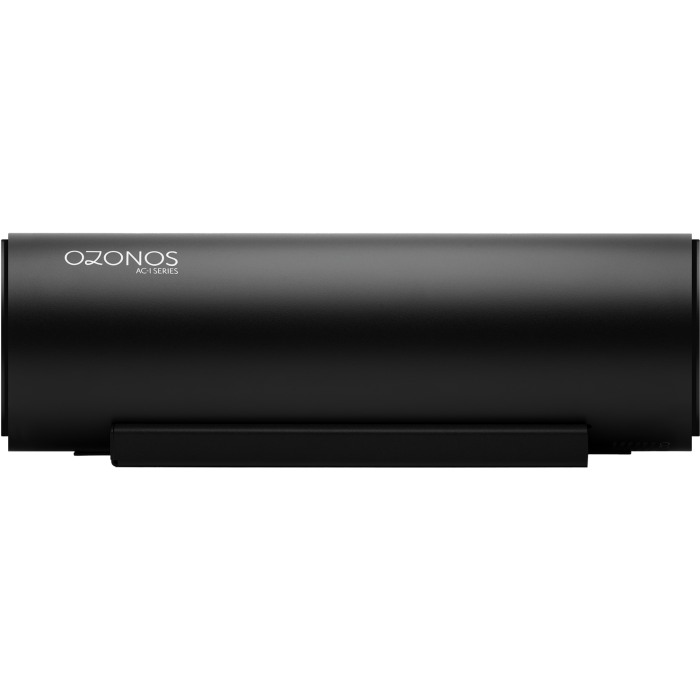
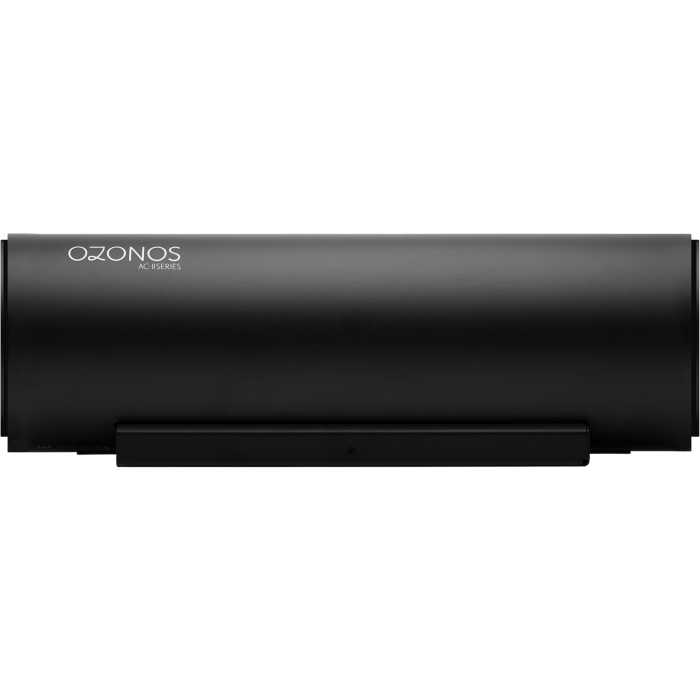
Which OZONOS® device is right for you?
Our recommendation:
- AC I & AC II Standard – ideal for bedrooms and smaller living spaces
- AC I & AC II Pro – for larger rooms and maximum performance
Get the most out of OZONOS®
Step 1: Choose the right location
Place the air purifier where you spend most of your time – the bedroom, living room or office.
Step 2: Optimal positioning
OZONOS® air purifiers should be positioned as high up in the room as possible (approx. 2 metres high) so that the air rising due to thermal convection can be effectively purified. A wall mount is the ideal solution for this position.
Step 3: No maintenance is required with OZONOS®
Whilst air purifiers with HEPA filters require regular maintenance, no filter changes are necessary with OZONOS®.
Avoid these mistakes!
- Placing the air purifier too low.
- Running the device too infrequently – for optimal effect, operate it continuously if possible.
- Not taking room size into account – choosing a device that is too small for large rooms.
Frequently Asked Questions About OZONOS® Air Purifiers for Indoor Particulate Matter
Indoor particulate matter refers to small airborne particles that float in the air inside a room. These include house dust, pollen, mold spores, soot particles, textile fibers, skin flakes, and combustion residues. PM2.5 and ultrafine particles are particularly relevant because they remain in the air longer and can penetrate deeper into the respiratory tract.
Fine particulate matter is produced by everyday activities such as cooking, frying, candles, wood-burning stoves, textiles, carpets, pets, pollen, mold spores, and the wear and tear of materials. In addition, particles from outside can enter the living space through windows, doors, clothing, or ventilation systems.
A suitable air purifier can help reduce airborne particles and certain pollutants in indoor air. Key factors include room size, placement, operating time, and technology. OZONOS® combines UV-C technology and ionization to address different types of particles through complementary mechanisms of action.
PM10 refers to particles with a diameter of up to 10 micrometers. These are often trapped in the upper respiratory tract. PM2.5 is smaller and can penetrate deeper into the lungs. This is why PM2.5 is particularly relevant for indoor air quality.
Fine dust can be reduced by regularly ventilating the room, dusting with a damp cloth, cleaning textiles, minimizing the use of candles and other sources of combustion, and using an appropriate air purifier. It is important to take a comprehensive approach that combines source reduction, surface cleaning, and active air purification.
References
U.S. Environmental Protection Agency (EPA). (2023a). Particulate matter (PM) basics. https://www.epa.gov/pm-pollution/particulate-matter-pm-basics
U.S. Environmental Protection Agency (EPA). (2023b). Sources of indoor particulate matter. https://www.epa.gov/indoor-air-quality-iaq/indoor-particulate-matter
World Health Organization (WHO). (2021). WHO global air quality guidelines: Particulate matter (PM2.5 and PM10), ozone, nitrogen dioxide, sulfur dioxide and carbon monoxide. World Health Organization. https://www.who.int/publications/i/item/9789240034228
Shayegan, Z., Lee, C. S., & Haghighat, F. (2018). TiO₂ photocatalyst for removal of volatile organic compounds in gas phase – A review. Chemosphere, 197, 84–97. https://doi.org/10.1016/j.chemosphere.2018.01.030
Images
AI-generated