OZONOS® for Dental Practices – Clean Air, Safe Treatments, Greater Trust

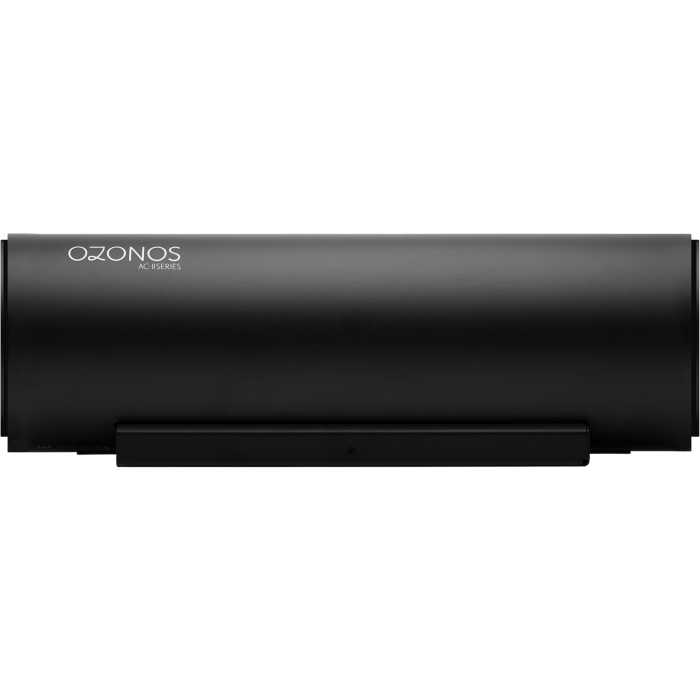
Smart Air Purification for the Highest Hygiene Standards in Dentistry
In dental practices, aerosols, odors, and airborne organic particles are generated every day—particularly in treatment rooms, sterilization areas, and waiting zones. In dentistry, practitioners and patients work more closely together than in most other medical fields. This particular spatial proximity makes consistently high air quality a central component of modern practice hygiene.
With OZONOS® air purifiers, you rely on scientifically based, continuous air purification that reduces organic airborne contaminants and sustainably improves indoor air quality—safely during ongoing practice operations.
We would be happy to advise you and work together to find the optimal solution tailored to your needs for the highest air quality in your dental practice.
How Ozone Works in Air Purification for Dental Practices
What is ozone and how is it used?
Ozone (O₃) is a reactive form of oxygen and a natural component of our atmosphere. It is formed from normal atmospheric oxygen (O₂) when additional energy is supplied through UV radiation or electrical energy. Ozone is unstable and breaks down again into oxygen (O₂) after a short time without leaving any residue.
Due to these properties, ozone has been used for decades specifically to reduce organic air contaminants.
How does ozone oxidize organic air pollutants?
Ozone differs from oxygen due to its high reactivity: one oxygen atom is only weakly bound and reacts immediately with suitable molecules in the ambient air. These include proteins, fats, and volatile organic compounds (VOCs)—substances that increasingly occur in dentistry through aerosols, exhaled air, treatment procedures, and organic residues.
During the process known as oxidation, these molecules are chemically altered or destroyed so that they lose their original properties, such as odor or biological activity. What remains is normal atmospheric oxygen, which makes ozone a residue-free method of continuous air purification.
How does ozone effectively reduce germs in indoor air?
Ozone has a proven germ-reducing effect because it reacts preferentially with proteins and lipids—key components of bacteria, viruses, fungi, and spores. Through these oxidative processes, cell membranes can be damaged and microbiological structures can be inactivated.
OZONOS® utilizes this effect at very low, controlled ozone concentrations that are significantly below relevant regulatory limits. Therefore, the process should not be considered a form of disinfection in the strict sense, but rather as the continuous reduction of airborne microbiological contamination.
This effect is supported by integrated UV-C light, which additionally damages the genetic material of microorganisms—a proven method widely used in medical environments to improve indoor air hygiene.

Important for Practice Operations
OZONOS® is not a conventional disinfection device, but a system for the continuous reduction of airborne organic contaminants. The effect is supported by integrated UV-C light, which damages the genetic material of viruses, bacteria, mold, and fungi.
At the same time, excess ozone quickly breaks down again into oxygen—without residues and without altering clean air components.
Why OZONOS® Is the Right Solution for Your Dental Practice
1. Continuous Air Purification During Operation
OZONOS® devices operate 24/7 without disrupting treatment procedures and continuously reduce organic air contaminants in treatment rooms, waiting areas, and auxiliary spaces.
2. Greater Safety for Staff and Patients
By reducing airborne germs and organic aerosol components, OZONOS® supports a healthy working environment in dental clinics—especially relevant during aerosol-intensive treatments.
3. Noticeably Improved Indoor Air Quality
Odors, aerosol fats, and organic compounds are broken down through oxidative processes. The result is a more pleasant, neutral indoor climate that is consciously perceived by patients and represents a significant improvement in everyday working conditions for the entire team.
4. Maintenance-Free & Cost-Efficient
No filter replacement, no consumables, minimal maintenance effort—ideal for efficient and simple practice operation.
5. Proven Safety
OZONOS® technology operates significantly below legal ozone limit values and is tested and approved for use in the presence of people.
Key Benefits for Dental Practices at a Glance
- Reduction of airborne organic contaminants → lower hygiene risk
- Continuous operation → ongoing air hygiene
- Odor neutralization → greater well-being
- Maintenance-free → no follow-up costs
- Easy integration → ready for immediate use
- TÜV-tested & scientifically validated → high investment security
Dr. Merwart about OZONOS®


TÜV Certification
OZONOS® Air-Cleaner AC-I
TÜV-SÜD Certification:
OZONOS® Air-Cleaner AC-I

(By scanning the QR code, you will be directed to the TÜV SÜD certification database – Certificate Air Cleaner AC-I)
TÜV Certification
OZONOS® Air-Cleaner AC-II
TÜV-SÜD Certification:
OZONOS® Air-Cleaner AC-II

(By scanning the QR code, you will be directed to the TÜV SÜD certification database – Certificate Air Cleaner AC-II)
OZONOS® Air Purification – Flexible and Efficient
Air purification in waiting areas – minimizing aerosols and organic contaminants
In the waiting area of a dental practice, a wide range of organic particles and gaseous contaminants accumulate—from aerosols produced by breathing to volatile organic compounds (VOCs) originating from clothing, cosmetics, or surfaces.
In this context, ozone works through its oxidative reactivity by preferentially reacting with proteins, fatty acids, and VOCs—substances that typically occur in indoor air. This oxidation process leads to odor-causing molecules being chemically altered or destroyed, resulting in a measurable improvement in air quality.
Especially in waiting areas where many people with different microbiological profiles remain at the same time, the continuous reduction of such organic contaminants can help reduce the overall atmospheric risk and significantly improve the perceived quality of the indoor environment.
Air purification in treatment rooms – continuous reduction of airborne contaminants during treatment
In treatment rooms, air quality is a critical factor, as aerosol-generating procedures such as prophylaxis or surgical interventions frequently take place. These aerosols contain organic matrix elements, including VOCs and microbiological structures.
Through the controlled generation of low ozone concentrations, OZONOS® can act oxidatively on these organic components. These oxidation reactions alter or eliminate the chemical properties of molecules suspended in the air, allowing the air to remain free from many odor-causing and potentially biologically active particles.
In addition, the integrated UV-C light supports germ reduction by directly damaging the genetic material of bacteria, viruses, and molds.
Air quality in older premises – challenges and targeted improvement
Older practice premises present particular challenges for air quality due to their structural characteristics. Such buildings are often more tightly sealed, may have less effective ventilation systems, and can exhibit higher baseline concentrations of organic contaminants—for example from historical building materials, carpets, or furnishings.
In such environments, the risk of accumulation of VOCs, odor molecules, and microbial fragments increases, which can affect both perceived air comfort and objective air quality.
Together, we can address the individual needs of your practice premises in an optimal way.
Optimal planning for new practice premises – personal & tailored
Especially for new or renovated dental practices, early and individualized planning of air purification is worthwhile in order to optimally consider room size, layout, materials, and intensity of use.
The OZONOS® team supports you personally—from selecting suitable devices to determining the optimal placement within your daily practice operations.

Prim. Dr. med. Klaus Vander
“As Medical Director of the Institute for Hospital Hygiene and Microbiology, the use of effective and at the same time safe methods for infection prevention is of central importance to me.
OZONOS® convinces me because it destroys germs, viruses, and allergens directly in the air—without allowing them to accumulate in filters. The ozone concentration used is significantly below all legal limit values and is safe even during ongoing operation.
For me, OZONOS® is an innovative and practical addition to hygiene management.“
Prim. Dr. med. Klaus Vander,
Medical Director of the Institute for Hospital Hygiene and Microbiology and Chief Hospital Hygienist of KAGes
The OZONOS® air purifier should be part of the basic equipment of every dental facility. It improves the health and well-being of patients and employees working in close contact with patients.